
The Sardinian Procession That Gave Me Goosebumps
If you ever find yourself in Sardinia on May 1st, trust me—drop everything and go to Cagliari. There’s something happening that’s not just beautiful, but deeply moving: La Festa di Sant’Efisio.
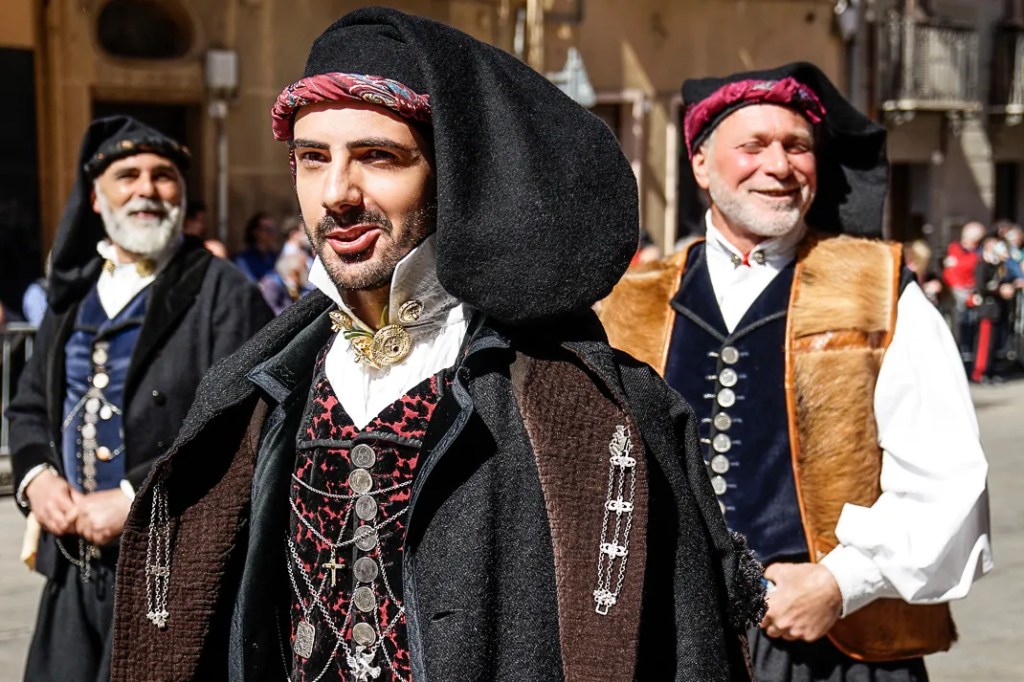
I still remember the first time I saw it. The rhythmic sound of footsteps on cobbled streets, the scent of myrtle and rose petals underfoot, and rows upon rows of people in vibrant, traditional Sardinian dress. It felt like I had stepped into a living painting. Or maybe something older—like a shared memory that belonged to everyone in the crowd.
Who Was Sant’Efisio?
Let’s rewind a little. Sant’Efisio was a Roman soldier who converted to Christianity and was martyred for it in the 3rd century. In April 1652, a terrible plague struck Sardinia , arriving from Catalonia in Alghero on a merchant ship. All of Sardinia was infected, but Cagliari was hit the hardest – about ten thousand inhabitants died, and that made almost half of the population of the city at that time. Cagliari was transforming into a cemetery. At this point, according to the legend, Saint Efisio appeared to the viceroy promising to help Sardinians. In exchange he wanted that every May 1st a procession will be held in his name.
The Cagliari authorities decided to make a vow to Saint Efisio, the first time in 1652 and a second time four years later: if he were able to defeat the plague, they promised to hold a procession and celebrations in his honor every year, starting from the Stampace neighborhood and ending in Nora, where the saint had been martyred. In September, heavy rains made the plague disappear, and the people have kept their promise—every single year since 1657, without fail. That’s over 360 years of tradition. Pandemic, war, rain, shine—nothing has ever stopped it.
What Makes It So Special?
This is not just a parade—it’s a vow, a spiritual journey, and a massive act of love. Over 3,000 people walk in the procession, many of them wearing authentic costumes that represent towns and villages from across the island. The costumes are ancient passed down from mother to daughter, father to son. My neighbor wears a dress that belonged to her great-great-grandmother!
You’ll see ox-drawn carts (the “traccas”), women carrying bread and flowers, and men in velvet and embroidery that hasn’t changed in centuries. It is beautifully colored, authentic and emotional.
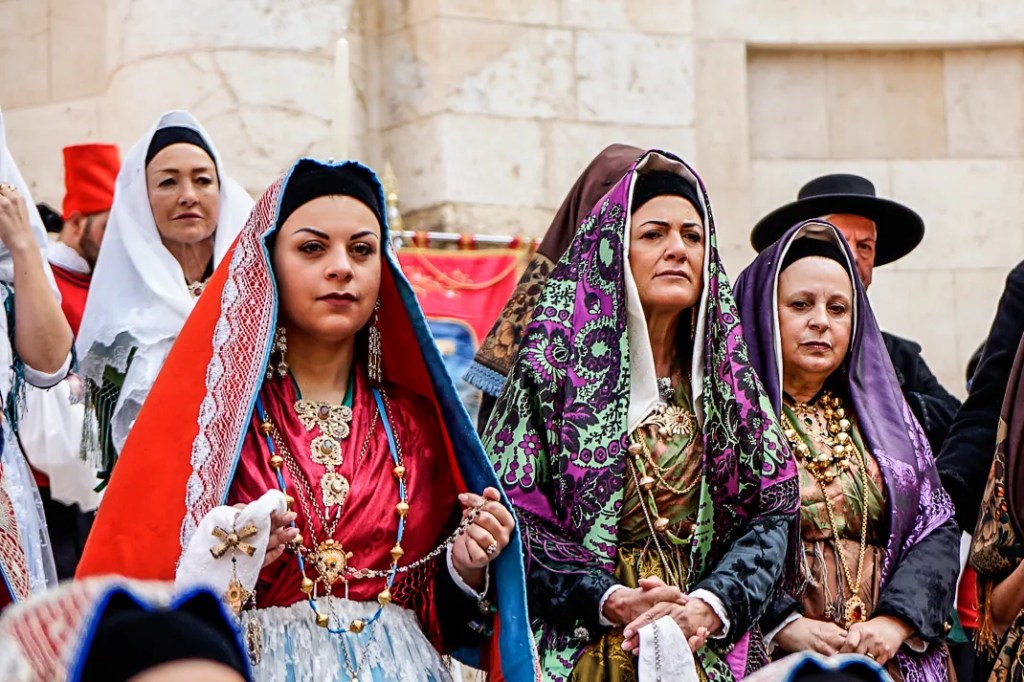
And then there’s Sant’Efisio himself – the ancient statue dressed in gold and carried in a golden carriage through the streets of Cagliari, all the way to the ancient site of Nora, where he was believed to be executed.
It’s not loud or flashy—it’s solemn, poetic, and incredibly human.
The Riders: A Moving Masterpiece
One of my favorite parts of the whole festival is the arrival of the Sardinian horse riders, known as “cavalieri”. Men and women on horseback, dressed in full traditional costumes, riding with pride and elegance through the crowd.
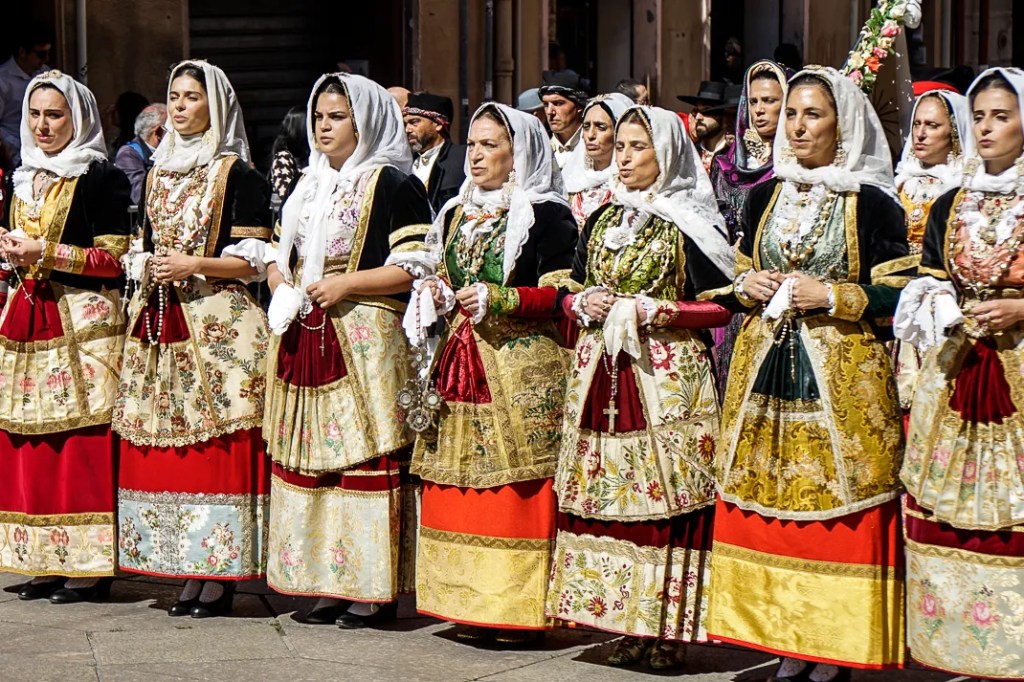
The women’s outfits in particular are breathtaking. Flowing skirts, embroidered bodices, shawls, jewelry—every detail tells a story, passed down from generations. It’s both fierce and graceful. Like watching queens on horseback.
Can Tourists Join In?
Absolutely. If you want a front-row seat to the procession in Cagliari, you can get spectator tickets in the special stands set up along Via Roma and other central streets. These are usually organized through the Cagliari Tourism Office or local cultural associations—just check their websites or stop by the info points when you’re in town. It’s wise to do this a couple of weeks in advance, especially if you want a seat in the most scenic areas.
But honestly? Even without a ticket, just being among the people, walking along the route, or standing in a side street surrounded by petals and prayers—that’s where the magic really hits you.
Practical Tips from Someone Who’s Done It
Arrive early: Streets fill up quickly, especially near the start of the procession.
- Bring water, sunscreen and umbrella: Sardinian spring can be warm but capricious. And traditionally, it rains on Sant’Efisio. The locals joke often about the weather “It is Sant’Efisio – the weather will be ugly.”
- Respect the atmosphere: This is not just a tourist event—it’s deeply sacred but joyous – a lot of spectators from little towns will be greeting and talking with their relatives walking in the procession.
- Be patient: It is a procession but it is very slow. There are so many people and animals participating in it, that it is well over 1 km long. It moves slow, and often comes to a halt. But it is a perfect moment to take some great photos of the people in their traditional town costumes. Mind you: each town has their own set and most of them are very colorful.
- Follow the route: If you’re feeling adventurous, walk with the crowd part of the way. Some people even follow all the way to Nora over several days. ( The procession ends on May 4, at 11:30, in Stampace, in the same place it started)
- Eat local afterward: The restaurants in Cagliari are buzzing with energy after the procession. Treat yourself to culurgiones, or seadas (trust me on this).
Honestly, this isn’t something you just see—you feel it. The weight of history, the unity of the people, and the scent of crushed petals on the pavement. I’ve been to many festivals around the world, but Sant’Efisio? It’s pure Sardinian soul.
And if you ever experience it, let me know what moved you the most. I still get goosebumps just thinking about the barefoot fisherman from Cabras walking all those kilometres to the church in Nora and back. This is what I call strength and dedication.
 Sardinia love blog